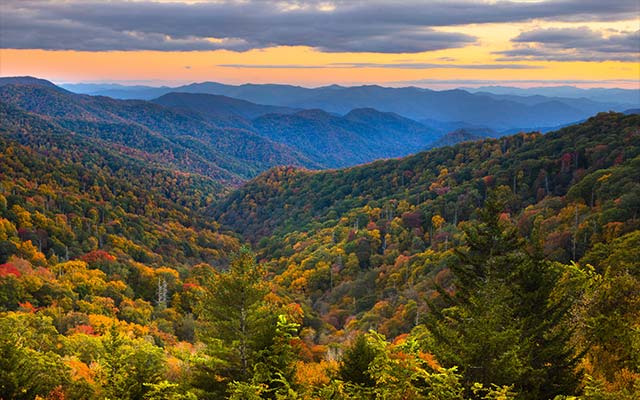
Fall color in the Great Smoky Mountains does not peak on a single date date, it moves down the mountain. From the highest ridges down to the valley floor, hues of yellow, orange and red burst forth at different times over roughly six weeks. This guide breaks the park into three elevation bands, from the 6,643-foot summit of Clingmans Dome down to the valley floors of Cades Cove and Gatlinburg. It gives you a week-by-week window for peak leaves at each elevation, plus parking and access details to help you decide if your trip actually works.
Smoky Mountains Fall Colors at a Glance
- Park elevation range: 875 feet to 6,643 feet at the summit of Clingmans Dome
- Above 4,000 feet: peak color early to mid-October
- 2,500 to 4,000 feet: peak color mid to late October
- Below 2,500 feet (Cades Cove, Roaring Fork, Gatlinburg): peak color late October into early November
- Parking tag required for any stop over 15 minutes: $5 per day, $15 per week, $40 per year
- Parking tags are physical only, and America the Beautiful annual passes do NOT substitute for one
- Clingmans Dome runs about 10 degrees cooler than Cades Cove on the same day
- NPS crowd guidance: arrive before 8am or after 4pm for the easiest parking and roads
When Do Fall Colors Peak in the Smoky Mountains?
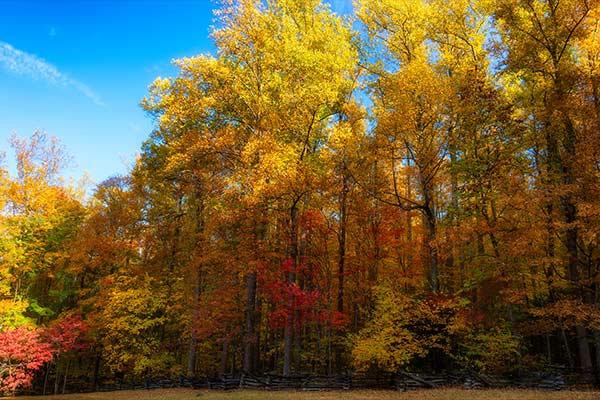
Fall colors in the Great Smoky Mountains peak according to elevation, not calendar date. Because temperatures drop as you climb, the ridgelines above 4,000 feet turn first, typically early to mid October, while the valley floors below 2,500 feet, like Cades Cove and Gatlinburg, do not peak until late October or even early November. That six-week window across roughly 5,800 vertical feet is the single most useful fact for planning your trip.
| Elevation Band | Approx. Peak Window | Destinations |
| Above 4,000 ft | Early to mid-October | Clingmans Dome (6,643 ft), Newfound Gap (5,046 ft) |
| 2,500 - 4,000 ft | Mid to late October | Mid-slope overlooks along Newfound Gap Road, upper Roaring Fork |
| Below 2,500 ft | Late October to early November | Cades Cove, Roaring Fork Motor Nature Trail, downtown Gatlinburg |
How High Is Clingmans Dome, and How Much Cooler Does It Get?
Clingmans Dome sits at 6,643 feet, the highest point in the park, and it runs about 10 degrees cooler than Cades Cove on the same afternoon. Pack a layer even on a warm day at the trailhead. Newfound Gap, the park's main road crossing, sits at 5,046 feet. The drive up from either Gatlinburg or Cherokee climbs about 3,000 feet in elevation, which is why the color changes so quickly as you ascend.
Where to See Early Fall Color in Late September?
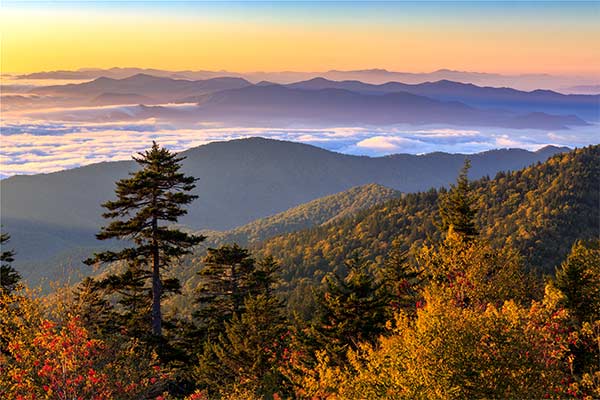
In late September and early October, chase the color high up. The ridges above 4,000 feet, including along Newfound Gap and Clingmans Dome, turn first because the high elevation brings cooler nights sooner than the valley floor. This is the time to head for the highest overlooks in the park. Pink Jeep Tours' Newfound Gap tour is built for exactly this stretch of the season. Your guide handles the drive up to 5,046 feet while you watch the color change in real time. As the road climbs it follows the crest of the Appalachian Trail where the season's earliest color shows up first.
Where to See Peak Fall Color in Mid-October?
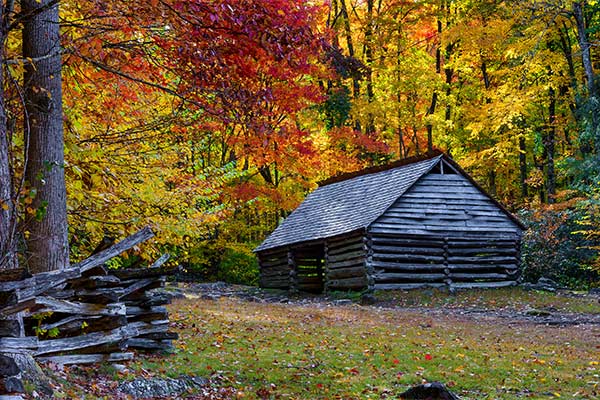
By mid-October, peak color has moved into the 2,500 to 4,000 foot mid-elevation band and some of the park's most photographed terrain. This is the sweet spot for most visitors, since it pairs vivid color with routes that do not require the highest, coolest overlooks. The Roaring Fork Motor Nature Trail tour covers 5.5 miles of a narrow, winding road through old-growth forest and past Grotto Falls, right in the mid-elevation sweet spot. For waves of fall color along the park's ridgelines, the Smoky Mountains Foothills Parkway tour strings together some of the widest panoramic views in the Smokies. Its route is ideal for photographers chasing mid-October color across multiple elevation bands at once.
Where to See Late Fall Color in Late October-Early November?
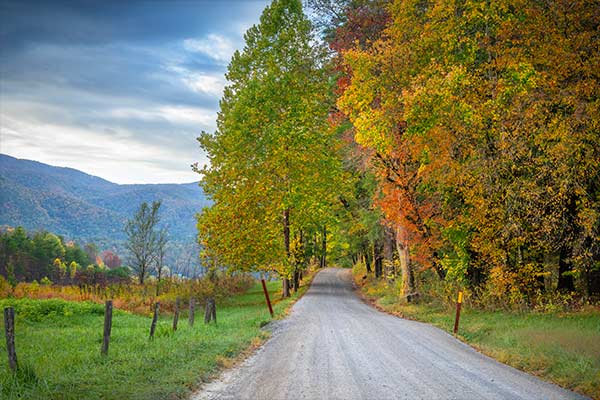
Late October into early November is when color finally reaches the valley floor, below 2,500 feet. This is when Cades Cove, Roaring Fork's lower stretches, and downtown Gatlinburg hit their own peak. It is the best window for travelers who want an easier, lower-elevation day without giving up the color. The Cades Cove tour loops the historic 11-mile valley where wildlife sightings (deer, turkey, sometimes black bear) are common among the colorful autumn foliage. Families with younger kids or grandparents often prefer the Gatlinburg Loop tour, a gentler route that stays close to town while still catching a tapestry of color. For a step back in time among the fall leaves, the Historic Elkmont tour winds past the ghost town's early-1900s cottages.
Fall Travel Tips for Great Smoky Mountains National Park
Do You Need a Smokies Parking Tag in Fall?
Yes. Any vehicle parked for źonger than 15 minutes anywhere in Great Smoky Mountains National Park needs a parking tag: $5 for a day, $15 for a week, or $40 for the year. The tag is a physical placard you display on your dashboard, and it is separate from any other park pass; an America the Beautiful annual pass does not substitute for it.
Is Cades Cove Open to Cars in October?
Yes. Cades Cove Loop Road is generally open to vehicles throughout the fall foliage season, offering access to the valley’s scenic mountain views, historic cabins, and abundant wildlife. The 11-mile loop is a popular drive for spotting fall color, so expect heavier traffic during peak foliage and on weekends. A guided Jeep tour can help you enjoy the scenery without the stress of navigating unfamiliar roads.
When Should You Go to Avoid the Fall Crowds?
Fall is the busiest season in the country's most-visited national park, especially on weekends during peak color. The National Park Service recommends arriving before 8am or after 4pm for the easiest time finding parking and moving through the park's main roads. Booking a guided tour also takes the parking and navigation pressure off you entirely, since your Jeep and driver are already sorted before you arrive.
Why See Fall Color from an Open-Air Jeep?
Chasing color by elevation means covering a lot of vertical feet in a single day, from valley floor to nearly a mile and a quarter up. An open-air Jeep puts you outside for every foot of that climb, so you feel the temperature drop as you gain elevation instead of watching it through a windshield. Your guide also knows which stretch of road is turning that particular week, which matters more than any calendar.
Smokies Fall Color Trip Tips
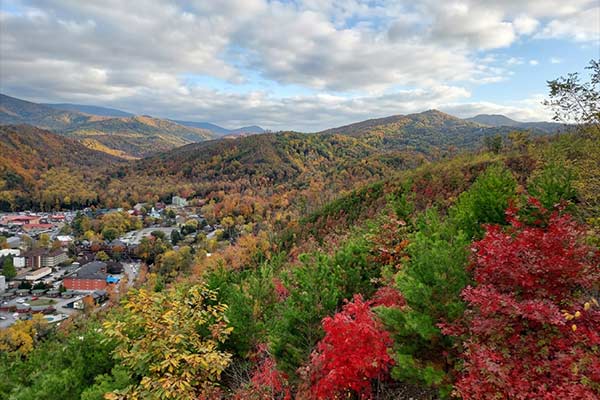
- Pick your elevation band first, then your dates: high country in early October, mid-elevation in mid-October, valley floor in late October to early November
- Pack layers. A 10-degree swing between Cades Cove and Clingmans Dome is normal on the same day
- Buy your parking tag before you go if you plan to park anywhere for more than 15 minutes
- Arrive before 8am or after 4pm to avoid the heaviest fall traffic
- Book tours early. Fall weekends sell out fastest in the Smokies
Experience Fall Color in the Smokies
Fall color in the Great Smoky Mountains moves from the ridgetops to the valley floor over roughly six weeks. Foliage timing varies by elevation and weather, so the best trip is the one timed for the elevation you actually want to see. Ready to chase it the easy way? Book a Pink Jeep Tour through the Smoky Mountains and let your guide put you in the right elevation on the right week, from the summit of Clingmans Dome to the valley floor of Cades Cove.